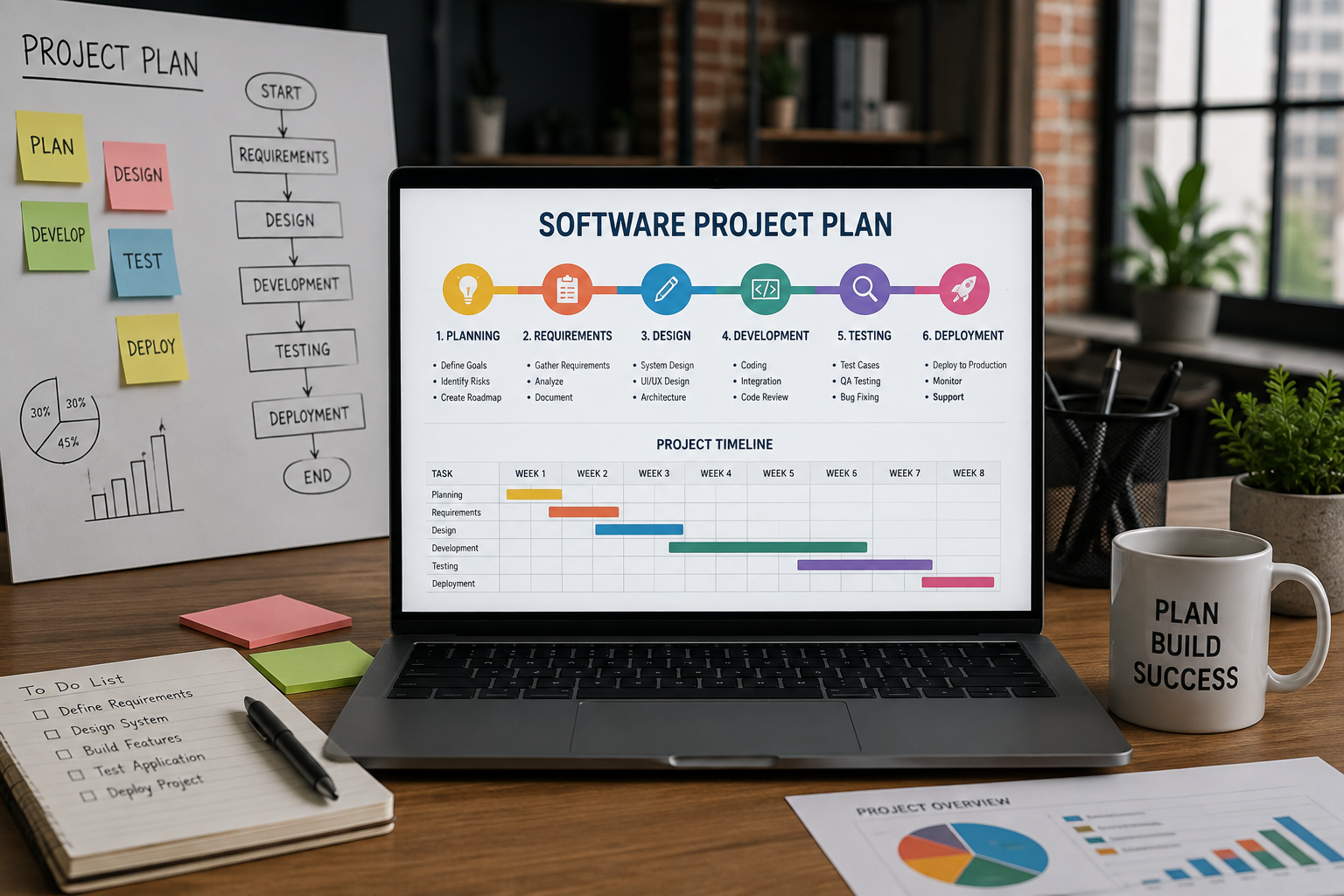
Effective Software Development Project Planning helps businesses define clear objectives, understand user expectations, prioritize features, and make informed technical decisions before development starts. It creates alignment between business goals and technical execution, reducing uncertainty throughout the project.
This guide explains the essential planning steps every business should follow before starting a software project, helping you build software that delivers long-term value instead of unnecessary complexity.
What Is Software Development Project Planning?
Software development project planning is the process of defining business goals, project scope, user requirements, timelines, budgets, technology choices, and resources before development begins. A well-planned project helps reduce risks, improve collaboration, control costs, and ensure the final software aligns with business objectives.
Why Software Development Project Planning Matters
Every software project starts with an idea, but not every idea becomes a successful product. The difference often lies in how well the project is planned.
Planning isn't just about creating a timeline or listing features. It's about understanding your business objectives, identifying potential challenges, and making strategic decisions before investing time and money in development.
Businesses that invest in proper planning often experience:
- Better collaboration between stakeholders and development teams
- More accurate project timelines
- Better budget management
- Fewer unexpected revisions
- Faster development cycles
- Software that genuinely solves business problems
Instead of reacting to problems during development, planning allows businesses to identify and resolve them early, making the entire development process smoother and more predictable.
What Does Software Development Planning Actually Involve?
Many business owners assume project planning only involves deciding which features to build. In reality, it also includes defining business goals, gathering requirements, estimating budgets, selecting technologies, identifying risks, and creating a clear project roadmap.
Think of project planning as creating the blueprint before constructing a building. A well-defined plan helps development teams make informed decisions and reduces costly changes later.
Common Mistakes Businesses Make Before Starting a Software Project
One reason software projects fail isn't because of poor coding—it’s because businesses skip the planning stage or underestimate its importance.
Let's look at some of the most common mistakes.
Starting Without a Clear Business Objective
One of the biggest mistakes is beginning development without clearly defining the business problem.
Instead of asking:
"What software should we build?"
Start by asking:
"What business challenge are we trying to solve?"
Every feature should support a measurable business goal, whether it's increasing operational efficiency, improving customer experience, reducing manual work, or generating new revenue.
Clear objectives make every future decision easier, from feature prioritization to technology selection.
Trying to Build Every Feature at Once
Many businesses want the first version of their software to include every possible feature.
While this sounds attractive, it usually creates longer development cycles, higher costs, and more complexity.
Successful projects focus on building a strong foundation first. Additional features can always be introduced based on user feedback and evolving business requirements.
Launching a focused product early often creates better business outcomes than waiting months for a feature-heavy application.
Ignoring the End User
Businesses sometimes make decisions based solely on internal discussions without understanding how customers or employees will actually use the software.
Software should simplify work—not create additional complexity.
Speaking with real users before development begins helps identify pain points, improve usability, and prioritize features that deliver the greatest value.
This early feedback often prevents expensive redesigns later.
Underestimating Budget and Timeline
A realistic budget should cover every stage of the project—from planning and design to development, testing, deployment, and future maintenance. Considering these costs early helps businesses avoid unexpected expenses and make better investment decisions.
Step 1: Define Clear Business Goals
Every successful software project begins with a clear vision.
Example: A retail business wanted to build an inventory management system. Instead of simply asking for "inventory software," they defined a clear objective: reduce stock discrepancies by 50% and automate daily inventory updates. This clear business goal helped prioritize the right features from the beginning.
Before discussing technologies, frameworks, or development approaches, identify exactly what success looks like.
Ask yourself:
- What business problem will this software solve?
- Who will use it?
- Which business process should improve?
- How will we measure success?
- What long-term business goals should this project support?
The answers to these questions create a strong foundation for every decision that follows.
For example, instead of saying:
"We need a mobile application."
A stronger objective would be:
"We want to reduce customer support requests by 40% by giving customers access to self-service features through a mobile application."
This transforms a simple idea into a measurable business objective.
Align Technology with Business Goals
Technology should always support your business goals rather than simply following market trends. Choosing the right technology based on project requirements helps improve scalability, performance, and long-term maintenance.
For example:
| Business Goal | Recommended Solution |
|---|---|
| Improve customer engagement | Mobile application with personalized notifications |
| Reduce manual | work Business automation software |
| Increase online sales | Scalable eCommerce platform |
| Improve reporting | Real-time analytics dashboard |
| Centralize operations | Enterprise management platform |
This business-first approach helps avoid unnecessary complexity and ensures every technical decision contributes to measurable outcomes.
Step 2: Understand Your Users Before Defining Features
One of the biggest planning mistakes is creating features based on assumptions rather than actual user needs.
Successful software solves real problems for real people.
Before finalizing requirements, spend time understanding:
- Who will use the software?
- What challenges do they face today?
- Which tasks consume the most time?
- What would improve their daily workflow?
- Which devices will they use most frequently?
Answering these questions helps development teams build software around user behaviour instead of internal assumptions.
This stage also improves the overall software development process, as requirements become clearer before development begins.
Gather Functional and Technical Requirements
Once user expectations are understood, it's time to document project requirements.
Requirements generally fall into two categories.
Functional Requirements
These define what the software should do.
Examples include:
- User authentication
- Payment processing
- Inventory management
- Notifications
- Reporting dashboards
- Customer management
Non-Functional Requirements
These describe how the software should perform.
Examples include:
- Security
- Performance
- Scalability
- Reliability
- Availability
- Compliance requirements
Well-documented requirements reduce misunderstandings during development and create a clear roadmap for the entire project.
Step 3: Choose the Right Technology Stack
Selecting the right technology stack is one of the most important decisions during the planning phase. The technologies you choose will influence your software's performance, scalability, maintenance, and future growth.
Many businesses make the mistake of choosing technologies simply because they're popular. Instead, technology should always be selected based on your business goals, project requirements, budget, and long-term vision.
When evaluating technologies, consider questions such as:
- Will the application need to support thousands of users in the future?
- Does it require real-time functionality?
- Will it integrate with existing business systems?
- Is cloud deployment required?
- How easy will future maintenance be?
Example: A startup planning to launch an MVP may choose technologies that support rapid development and future scalability, while a large enterprise might prioritize security, integrations, and long-term system stability. The right technology always depends on business goals—not trends.
At Codewik, we believe technology decisions should always be driven by business objectives rather than short-term trends. Choosing the right technology stack early helps businesses build scalable, secure, and future-ready software solutions.
Choosing the right technology early helps reduce future redevelopment costs and ensures the product can evolve as your business grows.
If your project involves unique workflows or business-specific processes, planning a proper custom software development process before development begins can significantly improve project outcomes and long-term flexibility.
Step 4: Build the Right Development Team
Even the best project idea can struggle without the right people behind it.
Software development is rarely handled by developers alone. A successful project usually involves multiple specialists working together throughout different stages of development
A successful software project typically requires professionals responsible for business analysis, UI/UX design, development, testing, and project management. Depending on the project's complexity, additional specialists may also be involved.
Not every project requires every role, but understanding who is responsible for each stage helps improve collaboration and accountability.
Whether you hire an internal team or work with an experienced development partner, make sure communication remains transparent throughout the project.
Regular progress updates, milestone reviews, and feedback sessions help reduce misunderstandings and keep development aligned with business expectations.
Step 5: Create a Practical Project Roadmap
Once requirements, technologies, and the development team are finalized, the next step is creating a realistic roadmap.
A project roadmap provides everyone involved with a clear understanding of what will happen, when it will happen, and who is responsible.
Instead of planning the entire project as one large task, divide it into smaller milestones.
A typical roadmap may look like this:
| Phase | Objective |
|---|---|
| Discovery | Understand business goals and project requirements |
| Planning | Define scope, timeline, and technical architecture |
| UI/UX Design | Design user journeys and interfaces |
| Development | Build application features |
| Quality Assurance | Test functionality, security, and performance |
| Deployment | Launch the software |
| Maintenance | Improve and scale based on user feedback |
Breaking projects into milestones makes it easier to measure progress, manage expectations, and adapt when business priorities change.
Step 6: Identify Risks Before Development Begins
Every software project involves risks, but many of them can be minimized through proper planning.
Rather than waiting for problems to appear during development, identify potential challenges as early as possible.
Some common risks include:
- Changing business requirements
- Budget overruns
- Third-party integration issues
- Unrealistic deadlines
Creating a simple risk management plan helps teams respond quickly instead of making rushed decisions later
For example, if a third-party API changes unexpectedly, having an alternative integration strategy already documented can save valuable development time.
Step 7: Plan Testing Before You Launch
Many businesses think testing happens only after development is complete.
In reality, quality assurance should be considered during planning itself.
Defining testing requirements early helps developers write cleaner code while ensuring critical business functions are validated before launch.
Testing should validate functionality, security, performance, compatibility, and user acceptance before launch. A structured testing strategy ensures the software performs reliably while reducing costly post-launch issues.
A structured testing strategy reduces production issues and improves user confidence after launch.
Remember, launching quickly is valuable—but launching reliable software is even more important.
Step 8: Prepare for Long-Term Growth
Launching software is not the end of the project—it is the beginning of its lifecycle.
As your business grows, customer expectations, technologies, and market conditions will continue to change.
Planning for future improvements helps businesses avoid expensive redevelopment later.
Consider questions such as:
- How will future features be added?
- Can the application scale with growing users?
- How will updates be managed?
- What security practices will be followed?
- How will performance be monitored?
Thinking beyond the initial launch ensures your investment continues delivering value for years to come.
This long-term perspective is an essential part of the software development lifecycle and helps businesses build software that remains reliable, secure, and scalable over time.
Software Project Planning Checklist
Before starting development, review this simple checklist:
- Clearly define business goals
- Identify your target users
- Gather detailed project requirements
- Prioritize core features
- Set a realistic budget
- Define project milestones
- Select the right technology stack
- Build the right development team
- Plan testing early
- Prepare for future scalability and maintenance
Completing these steps before development significantly improves the chances of delivering a successful software product.
Final Thoughts
At Codewik, we've seen that businesses achieve better project outcomes when they invest time in planning before development begins. A well-defined roadmap helps teams make smarter decisions, reduce costly revisions, and build software that supports long-term business growth.
Whether you're developing an internal business platform, launching a SaaS product, or building a customer-facing application, a structured planning process helps reduce risk, improve collaboration, and accelerate long-term success.
If you're looking for experienced software development services to transform your ideas into scalable digital solutions, working with the right technology partner can make all the difference. From project discovery and planning to development, deployment, and ongoing support, choosing the right team helps ensure your investment delivers lasting results.