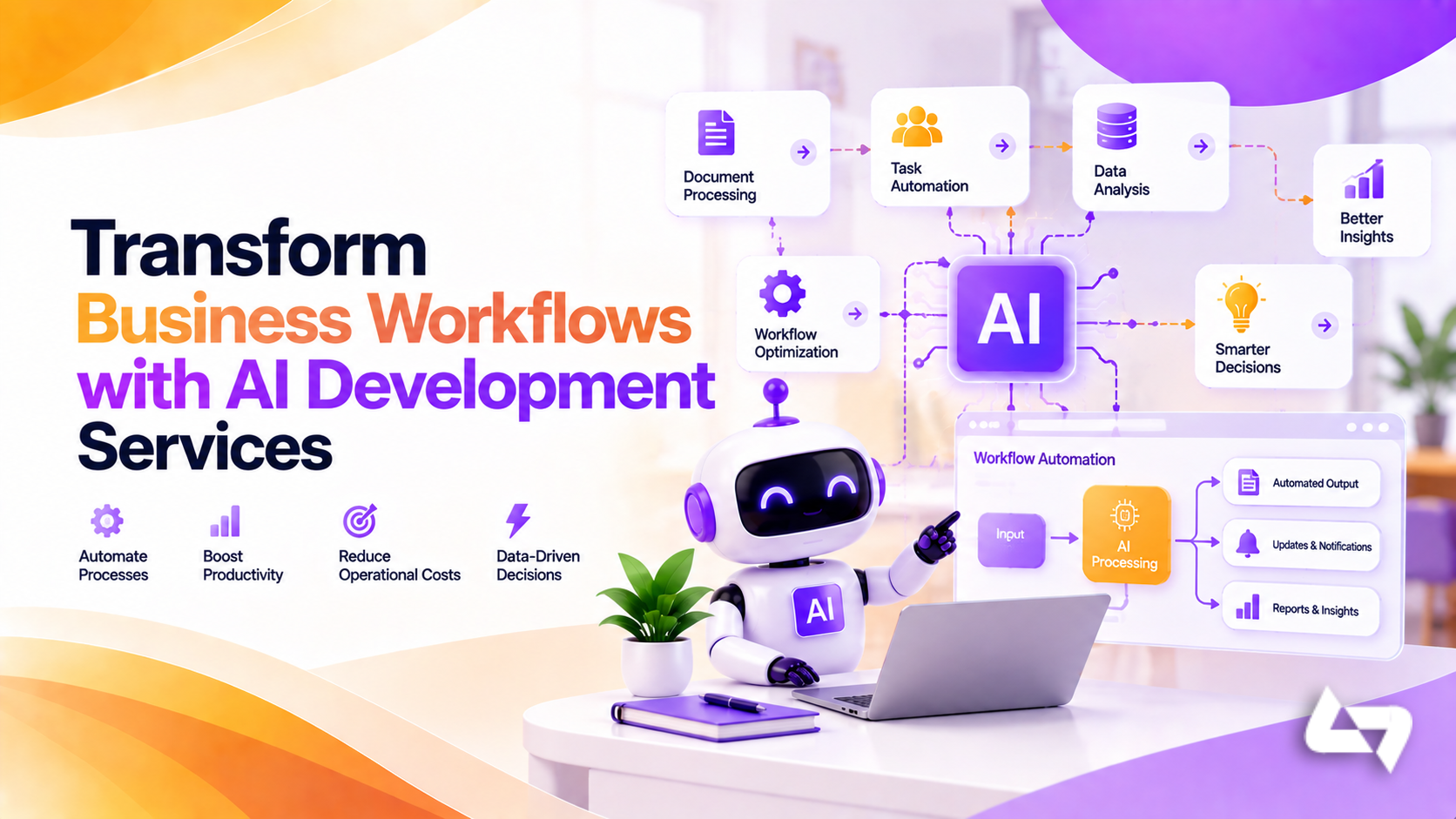
What Is Autonomous Workflow Automation?
Autonomous workflow automation refers to systems that can independently handle tasks, make decisions based on data, and optimize processes over time.
Unlike traditional automation, which follows predefined rules, AI-powered workflows:
- Adapt to changing data
- Learn from past outcomes
- Make context-aware Decisions
- Reduce dependency on manual intervention
This makes them far more effective in dynamic business environments.
How AI Development Services Drive Autonomous Workflows
1. Intelligent Decision-Making Systems
AI workflows extend their functionality beyond mere task execution When systems process data patterns through analysis they generate predictive outcomes which lead to automatic system actions.
AI automated systems in customer service utilize their capability to direct customer inquiries to appropriate departments while providing solution recommendations and resolving customer issues without need for further escalation.
2. Real-Time Data Processing
Dynamic workflows depend on immediate access to live data. AI models process large volumes of structured and unstructured data instantly which enables businesses to make rapid decisions.
AI Software Development creates essential systems which handle ongoing data streams through their ability to build scalable systems.
3. Integration Across Business Systems
AI-powered workflows establish connections between multiple software applications which include CRM systems and ERP platforms as well as analytics tools to create a cohesive operational framework.
AI consulting services enable businesses to pinpoint their essential integration areas while developing operational frameworks which function smoothly throughout their entire organization.
4. Continuous Learning and Optimization
AI-based workflows achieve performance improvements through their continuous development process. Machine learning systems utilize result data to enhance their operational procedures through automatic process improvements.
This ensures:
- Higher accuracy
- Reduced errors
- Improved performance over time
These capabilities are often delivered through advanced ai and machine learning solutions tailored to business needs.
5. Automation of Complex Tasks
Artificial intelligence can perform document processing and predictive maintenance tasks which were formerly considered too difficult for automated systems to handle.
Artificial intelligence services are currently being used by various industries to automate
- Customer interactions
- Fraud detection
- Supply chain Decisions
- Content generation
Key Benefits of Autonomous Workflow Automation
1. Increased Operational Efficiency
The system achieves speedier task completion because it needs only small human assistance which decreases both wait times and work interruptions.
2. Cost Reduction
Businesses use automation to decrease operational expenses because it reduces the need for manual work while increasing their ability to use all available resources.
3. Improved Accuracy
The use of data-based decisions by artificial intelligence systems enables them to decrease human mistakes.
4. Scalability
Businesses can expand their operations without needing to hire more employees or acquire additional facilities.
5. Enhanced Customer Experience:
The combination of quick response times and tailored customer interactions leads to higher customer satisfaction levels.
Real-World Use Cases
- Customer Support Automation: AI-powered systems can handle queries, resolve issues, and escalate only complex cases. This is where ai for customer support agents becomes highly effective.
- Finance & Risk Management: Automated systems use workflows to discover suspicious activity which helps prevent fraud and maintains continuous compliance.
- Healthcare Operations: Artificial intelligence streamlines patient data handling and diagnostic assistance and operational process management in healthcare facilities.
- E-commerce & Retail: AI-powered workflows boost operational efficiency and drive sales through their ability to deliver customized product suggestions and control stock levels.
Challenges to Consider
The company needs to understand the three data problems which need expert knowledge and their associated costs to integrate their product into the market. The organization requires both data scientists who can analyze their data and track their business results and operational specialists who can perform their core business activities.
The right AI development solution needs to be selected because it will help organizations to solve their existing business problems.
Future of Autonomous Workflows
The future of work will depend on autonomous systems which use AI agents to work together and develop and complete tasks without needing human input.
Businesses that invest early in intelligent automation will gain a strong competitive advantage in the coming years.